
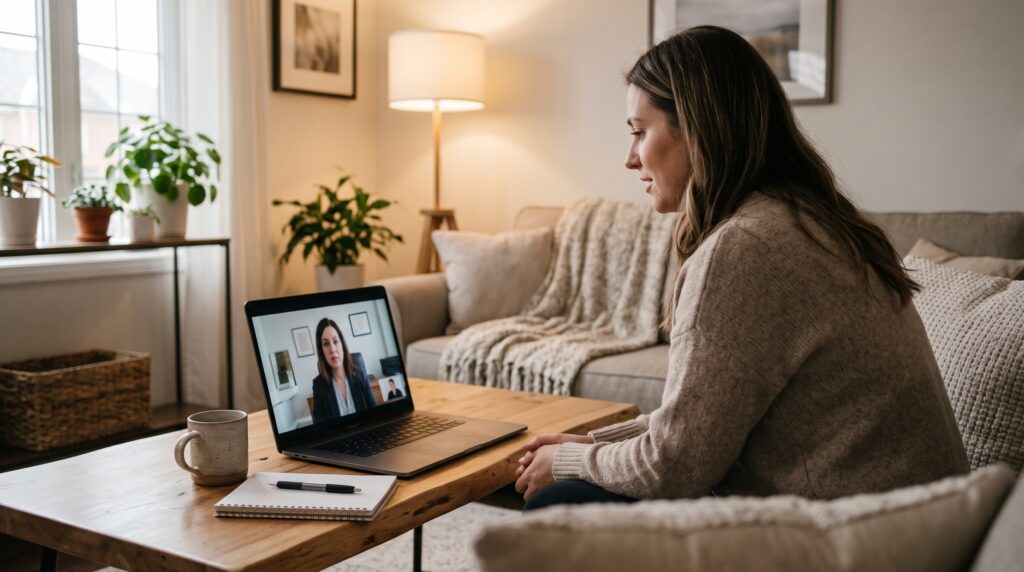
Online Therapy for Anxiety Relief in Vaughan, Ontario
Living with persistent worry, panic attacks, or social dread can make everyday life feel exhausting. For residents across Vaughan, Ontario, balancing demanding careers, family schedules, and commuting along the 400 corridor often creates additional barriers to seeking in-person psychological support.
Online therapy for anxiety relief has transformed mental healthcare accessibility throughout York Region and the greater province. Through secure, confidential telehealth platforms, you can now receive high-standard clinical care directly from the comfort and privacy of your home or office.
How Does Online Therapy Effectively Treat Anxiety Disorders?
Virtual anxiety treatment is not an informal chat over webcam; it is a structured, goal-oriented clinical intervention delivered by regulated mental health professionals.
Therapy targets anxiety by identifying the maladaptive thought loops and avoidance habits that keep fear active. In an online setting, clinicians guide you through real-time interventions, teach self-regulation exercises, and assign practical exercises that you apply directly within your own daily environment.
Clinical Insight: Virtual therapy allows clients to confront and manage anxiety triggers in their real-world setting—whether that is navigating remote work stress at a desk or managing panic symptoms in their living room—bridging the gap between the clinic and real life.
What Types of Anxiety Disorders Can Be Treated Online?
Telehealth is highly versatile and accommodates virtually all primary presentations of anxiety. Identifying the signs you need anxiety therapy is often the first step toward getting targeted support.
Core anxiety conditions successfully treated via telehealth include:
-
Generalized Anxiety Disorder (GAD): Chronic, uncontrollable worry about finances, health, career, or daily responsibilities.
-
Social Anxiety Disorder: Intense fear of judgment, scrutiny, public speaking, or social interactions.
-
Panic Disorder and Agoraphobia: Recurring panic attacks paired with fear of future attacks or open spaces.
-
Specific Phobias: Overwhelming fears of flying, driving, medical procedures, or specific objects.
-
Health Anxiety (Illness Anxiety): Persistent preoccupation with having or developing serious medical issues.
-
Obsessive-Compulsive Disorder (OCD): Intrusive thoughts combined with repetitive mental or behavioral rituals.
What Are the Benefits of Synchronous vs. Asynchronous Therapy Sessions?
Choosing the right format depends on your clinical needs, schedule, and lifestyle:
-
Synchronous Therapy (Live Video or Phone): Involves real-time, 50-minute virtual sessions. This approach fosters spontaneous dialogue, allows clinicians to observe micro-expressions, and provides immediate support for challenging emotional work.
-
Asynchronous Therapy (Secure Messaging & Journaling): Involves exchanging messages or submitting thought records between appointments. While convenient for tracking mood spikes, asynchronous support is best utilized as an adjunct to live sessions rather than standalone care for moderate-to-severe anxiety.
At York Region CBT, we prioritize synchronous video therapy to ensure you establish a safe, collaborative therapeutic alliance with your clinician.
Which Core Therapeutic Modalities Are Used in Online Anxiety Treatment?
Effective virtual therapy relies on the same gold-standard, evidence-based frameworks applied during face-to-face visits:
-
Cognitive Behavioural Therapy (CBT): Identifying and restructuring automatic negative thoughts and behavioral avoidance.
-
Acceptance and Commitment Therapy (ACT): Developing psychological flexibility and clarifying personal values.
-
Mindfulness-Based Cognitive Approaches: Cultivating somatic grounding and non-judgmental awareness of physiological anxiety.
-
Exposure and Response Prevention (ERP): Systematically facing feared sensations or situations to dismantle panic loops.
How Does Digital Cognitive Behavioral Therapy (CBT) Work for Anxiety Relief?
Cognitive Behavioural Therapy operates on the principle that our thoughts, emotions, and behaviors are inextricably linked. For a deeper breakdown of these mechanisms, review our comprehensive cognitive behavioural therapy for anxiety guide.
During digital CBT sessions, you and your therapist will:
-
Map the Anxiety Cycle: Pinpoint how catastrophic thinking triggers physical arousal (racing heart, shallow breathing, muscle tension).
-
Cognitive Restructuring: Use shared digital worksheets and interactive screens to test the validity of anxious assumptions.
-
Design In-Vivo Behavioral Experiments: Test feared outcomes in your everyday surroundings while your therapist guides you through the process in real time.
What Roles Do Acceptance and Commitment Therapy (ACT) and Mindfulness Play?
While CBT focuses heavily on reframing unhelpful cognitions, Acceptance and Commitment Therapy (ACT) and Mindfulness teach clients how to change their relationship with anxiety:
-
Mindful Defusion: Stepping back from anxious thoughts so they are viewed simply as mental events rather than absolute facts.
-
Experiential Acceptance: Making room for uncomfortable bodily sensations without fighting or escalating them.
-
Committed Action: Moving toward meaningful life goals—such as career advancement, social connection, and parenting values—even when anxiety is present.
Does Online Therapy Work as Well as in-Person Anxiety Treatment?
Yes. Multiple clinical trials have shown that online psychological treatment produces therapeutic outcomes equivalent to traditional face-to-face sessions.
A landmark systematic review published by the World Journal of Psychiatry confirmed that videoconference-based psychotherapy matches in-person care in both efficacy and the strength of the therapeutic alliance.
What Does Research Say About Online Therapy Outcomes for Anxiety?
Peer-reviewed clinical evidence repeatedly demonstrates that virtual therapy offers durable, long-term anxiety relief:
-
Equal Symptom Reduction: Standardized anxiety rating scales (such as the GAD-7) reveal comparable symptom drops across both virtual and in-person cohorts.
-
Lower Drop-Out Rates: Telehealth eliminates commuting barriers, parking hassles, and weather-related travel disruptions, resulting in higher session attendance and treatment completion.
-
Relapse Prevention: Because skills are acquired within the client’s everyday physical environment, behavioral habits are more easily maintained after treatment ends.
How Satisfied Are Users With Virtual Anxiety Treatment?
Client satisfaction ratings for virtual care consistently match or exceed those for clinic-based visits. Clients frequently report:
-
Reduced baseline stress prior to sessions due to avoiding GTA traffic.
-
Increased emotional comfort opening up in their personal environment.
-
Greater flexibility in scheduling sessions around family or work commitments.
How Can You Access Online Therapy for Anxiety Relief?
Beginning virtual therapy is straightforward:
-
Book an Initial Consultation: Schedule an introductory phone call with our clinic coordinator to discuss your presenting concerns and clinical goals.
-
Match with a Regulated Clinician: You will be paired with a practitioner whose clinical background aligns with your unique symptoms.
-
Access the Secure Portal: You will receive a private, encrypted link (compliant with PHIPA regulations) to join your video session from any laptop, tablet, or smartphone.
What Are the Costs and Insurance Options for Online Anxiety Therapy?
In Ontario, private psychological services are not covered by provincial OHIP, but they are widely covered by private and employer-sponsored extended health insurance plans:
-
Extended Health Benefits: Most workplace benefit packages provide an annual maximum for Registered Psychologists, Registered Psychotherapists, or Registered Social Workers.
-
Direct Reimbursement: After each session, you receive an itemized official receipt containing your provider’s regulatory license number for direct submission to your insurer.
-
Tax Deductions: Psychological services can often be claimed as eligible medical expenses on your annual Canadian income tax return.
What Licensing Laws Affect Online Therapy Providers Across States and Provinces?
Regulatory governance protects client safety and confidentiality:
-
Jurisdictional Regulations: In Ontario, therapists must be registered under provincial bodies such as the College of Psychologists of Ontario (CPO) or the College of Registered Psychotherapists of Ontario (CRPO).
-
Cross-Border Provision: Psychotherapists can generally only treat clients physically located within the province or state in which they are licensed. If you reside in Ontario (including Vaughan, Richmond Hill, Markham, Newmarket, or Toronto), our team is legally authorized to provide your care.
What Are Common Questions About Online Therapy for Anxiety Relief?
Does Online Therapy Actually Work for Severe Anxiety?
Yes. Telehealth is effective for moderate to severe anxiety disorders. However, during your intake assessment, our team verifies that virtual care is clinically appropriate. If severe acute crisis support or intensive medical stabilization is required, we provide appropriate local referral options.
Is Online Therapy Cheaper Than in-Person Counseling?
Typically, per-session professional fees remain identical whether seen in-person or virtually, as the same licensed clinician provides the service. However, online therapy saves clients time, gas, public transit costs, parking fees, and childcare expenses.
What Type of Therapy Is Best for Generalized Anxiety Disorder Online?
Cognitive Behavioural Therapy (CBT) remains the first-line treatment for GAD. Pairing CBT with Acceptance and Commitment Therapy (ACT) provides clients with concrete tools to disengage from worry spirals and calm physical hyperarousal.
How Do Online Therapy Platforms Connect You With Licensed Anxiety Counselors?
Who Are Licensed Professional Counselors and What Is Their Role in Telehealth?
In Ontario, psychotherapy is a controlled act. Treatment is provided by:
-
Registered Psychologists (C.Psych.)
-
Registered Psychotherapists (RP or RP-Qualifying)
-
Registered Social Workers (RSW)
These professionals adhere to strict ethical codes, privacy mandates, and continuing education standards set by provincial colleges.
How Platforms Match Patients to Anxiety Specialists?
Rather than relying on automated algorithms, dedicated group practices like York Region CBT use clinical intake assessments to hand-match each client with a therapist who specializes in their specific subtype of anxiety, age bracket, and schedule requirements.
Take the Next Step Toward Anxiety Relief
You do not have to navigate chronic worry, social isolation, or panic alone. With evidence-based online therapy, compassionate and specialized support is available right from home.
Ready to regain clarity and calm?
Book an initial phone consultation with the York Region CBT team today, or explore our Adult Therapy Services to learn more about how we can support you.